You buy a new piece of gear expecting a clean upgrade path, then the hardware world reminds you it loves chaos. One CPU shows up in Windows as a completely different tier. A wireless keyboard starts flexing battery life numbers that sound fake at first glance. A city-builder pushes simulation realism hard enough to make old favorites look dated. And now even the FAA is openly courting gamers because high-speed decision making has real-world value. If you follow PS5 mods, Switch shells, or Steam Deck accessories, this matters more than it sounds. These are all signals that enthusiast hardware culture is shifting toward faster polling, more simulation-heavy workloads, sharper buyer scrutiny, and broader respect for gaming-born skills.
This week’s pattern is pretty clear: the market is rewarding people who read spec sheets carefully, question auto-detected labels, and think about control precision as a real performance advantage rather than cosmetic fluff.
The big picture: gaming-adjacent hardware is getting more serious
At first glance, these stories seem unrelated. A city sim. An Intel naming mess. A Keychron board with ultra-high polling and huge battery claims. A government hiring campaign aimed at gamers. Put them together, though, and the trend line is obvious.
- Simulation is becoming a headline feature, not a niche checkbox. Whether it’s a highly realistic city-builder or real-world air traffic control recruitment, systems thinking is having a moment.
- Product labels are no longer enough. If software tools, BIOS, and OS-level readouts can identify a chip as something else, buyers need stronger verification habits.
- High refresh and low-latency input tech keeps spreading. 8K polling used to sound like pure esports flex; now it’s entering broader enthusiast conversations.
- Battery efficiency is now a selling weapon. Big endurance claims are becoming part of the performance pitch, not just convenience marketing.
For console accessory shoppers, that combination changes what counts as a “smart buy.” You’re no longer just choosing between colors, grips, and shell finish. You’re choosing between products that promise measurable input gains, better durability, and less guesswork across multiple platforms.
Why the Intel Core Ultra mix-up is a warning for every enthusiast buyer
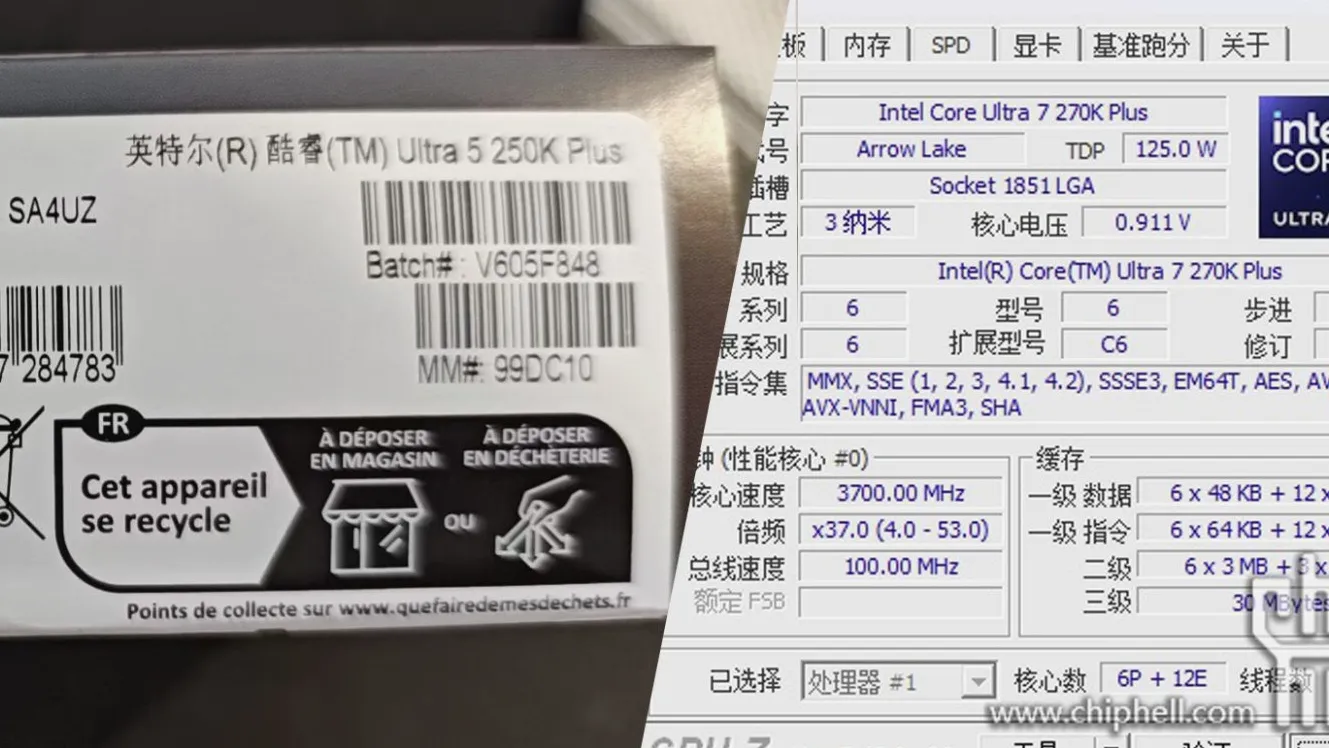
The strangest hardware story in the mix is the Intel one: a buyer purchases a Core Ultra 5 250K Plus, then sees the system identify it as a Core Ultra 7 270K Plus in CPU-Z, BIOS, and Windows, even though the underlying configuration doesn’t magically turn it into a higher-class chip.
That’s not just a funny screenshot story for PC forums. It’s a reminder that detection layers can mislead you, especially around newly launched or refreshed hardware with evolving microcode, motherboard support, or database recognition. If you mod controllers, swap Steam Deck internals, or install premium console accessories, you’ve already seen the same principle in a different form: auto-detection is useful, but it is not gospel.
Why this matters beyond desktop CPUs
- Firmware maturity matters. Early BIOS support, software utility updates, and vendor-side naming entries can all lag behind actual product availability.
- The label on the box and the behavior in software can conflict. That creates confusion for performance testing, resale, troubleshooting, and warranty conversations.
- Spec verification is now a buyer skill. You should validate cores, clocks, thermals, and behavior instead of trusting the first app readout.
If you’re shopping enthusiast gear, especially during early release windows, build a habit:
- Check multiple tools, not just one.
- Compare reported hardware behavior against the official expected configuration.
- Update BIOS, chipset drivers, and monitoring apps before assuming you got a miracle upgrade—or a scam.
- Save screenshots of packaging and device info in case the issue becomes a support ticket later.
That same logic applies to console hardware mods. If your new trigger kit, replacement sticks, or custom shell behaves oddly after install, don’t immediately assume the part is defective. Sometimes the problem is firmware, calibration, software labeling, or version mismatch.
For players already tweaking ergonomics and button feel, a well-built ps5 custom controller setup makes more sense when you approach it like a hardware project, not just an impulse accessory purchase.
Keychron’s 8K push shows where input hardware is headed
The other standout signal is the Keychron Q6 Ultra 8K review angle: 8 KHz polling paired with a claimed 660 hours of battery life. That combination matters because it attacks the usual enthusiast tradeoff head-on. Normally, when you push refresh and polling higher, battery anxiety follows right behind. Here, the pitch is basically: why not chase both?
Will every gamer need 8K polling? No. Will every setup fully benefit from it? Also no. But that misses the point. The significance is that ultra-high report rates are escaping the tiny competitive-mouse niche and becoming part of broader input-device marketing.
What 8K really signals for gamers
- Latency has become a lifestyle spec, not just an esports stat.
- Premium gear now has to justify itself with measurable performance, not just materials and RGB.
- Battery efficiency is being treated like engineering credibility. If a company can promise high-speed wireless behavior without terrible endurance, that gets attention fast.
For console players, the direct takeaway is less about buying a mechanical keyboard for your PS5 and more about understanding where accessory expectations are moving. Polling rate, scan consistency, wireless stability, and battery optimization are becoming central to the way people judge controllers, docks, back-button kits, and handheld accessories.
That’s especially relevant if you play across platforms. Steam Deck users already know how quickly an accessory goes from “nice to have” to “mandatory” once it improves input consistency or cuts charging friction. The same mentality is spreading to controllers and modular parts.
Quick reality check: 8K polling is not a magic DPS buff. If your screen, game engine, connection, and reaction chain are the actual bottlenecks, the benefit shrinks. But as a market signal? It’s huge.
The hidden link between realistic city-builders and hardware buying
That city-builder story might seem like the odd one out, but it actually reinforces the same market trend. A “highly realistic” contender being framed as serious competition for Cities: Skylines says one thing loud and clear: simulation depth still sells.
Why should hardware readers care?
- Simulation-heavy games punish weak systems and sloppy input. They expose CPU behavior, memory management, UI friction, and thermal instability fast.
- They create demand for comfort accessories. Long sessions mean grips, stands, cooling solutions, and low-fatigue control setups matter more.
- They reward precision over flash. If you’re spending hours managing transport logic, zoning, and infrastructure flow, reliable controls beat gimmicks every time.
This is one reason Hall effect upgrades keep staying relevant. If your sessions are long and your movements repetitive, stick drift stops being a hypothetical and starts becoming a tax on your patience. A quality GuliKit hall effect joystick option is the kind of upgrade that aligns perfectly with this trend: more durability, steadier input, and fewer headaches over time.
Expert-level takeaway for accessory shoppers
Don’t evaluate a mod or accessory only by how it feels in a five-minute test. Evaluate it by session type.
- Fast shooters expose latency, snap-back behavior, and trigger feel.
- Racing games expose consistency and grip fatigue.
- City-builders and sims expose stick drift, menu friction, and ergonomic weak spots over long sessions.
Different genres reveal different flaws. That’s where smart buyers separate themselves from people chasing specs they’ll never actually notice.
The FAA recruiting gamers is bigger than a quirky headline
The FAA leaning into gamer recruitment sounds like one of those weird crossover stories that burns hot for a day and disappears. But look closer and it says something meaningful about how gaming skills are being perceived outside hobby circles.
- Rapid information filtering is valuable.
- Tracking multiple moving variables at once is valuable.
- Decision making under pressure is valuable.
- Spatial awareness and pattern recognition are valuable.
That should sound familiar if you’ve ever managed a chaotic multiplayer match, optimized a sim economy, or tuned a handheld loadout around battery draw and thermal limits. The point isn’t that gaming automatically makes you an air traffic controller. The point is that gaming-adjacent skills are being taken more seriously, and that seriousness tends to spill back into hardware expectations.
Want proof? Look at how enthusiast communities discuss gear now:
- Not just “Does it look cool?”
- But “What’s the real polling rate?”
- “How stable is the connection?”
- “How does it hold up after six months?”
- “Will this improve precision or just empty my wallet?”
That’s a more mature market, and honestly, a more demanding one. Good. Accessory brands should have to work harder for your money.
What this means for PS5, Switch, and Steam Deck buyers right now
If you strip away the headlines, the practical playbook is straightforward. You should be shopping for hardware in 2026 with a more skeptical, performance-first mindset.
Use this quick checklist before you buy
- Verify before you trust. New chips, new firmware, and fresh refreshes can produce weird software identification issues.
- Treat battery claims as part of performance. Endurance isn’t separate from competitive usefulness; if your accessory dies mid-session, the spec sheet already lost.
- Match accessories to genre demands. Drift resistance, grip texture, trigger response, and thermals all matter differently depending on what you play.
- Watch for “ultra” branding inflation. Fancy naming does not guarantee meaningful gains. Measurable behavior does.
- Prioritize long-session comfort. The best mod is often the one that still feels right three hours later, not the one that wins the first impression test.
And here’s the question more buyers need to ask: are you paying for a real input advantage, or just paying to feel like you upgraded?
That distinction matters a lot in the current accessory market because premium branding is getting louder while the actual value gap between products can still be surprisingly narrow.
The near-future accessory trend to watch
The strongest trend across these stories is not any single product. It’s the market’s growing obsession with credible performance claims.
- More scrutiny of hardware identification and firmware behavior
- More demand for low-latency wireless reliability
- More appreciation for simulation-friendly precision and comfort
- More pressure on brands to back up premium pricing with tangible benefits
Expect that to hit console accessories hard. PS5 and Steam Deck users are increasingly borrowing expectations from enthusiast PC spaces: better polling, stronger durability, more transparent specs, and fewer mystery behaviors. Switch modders have been living this reality for years already, especially around shells, sticks, and install quality.
If you want the actionable takeaway, here it is: buy fewer accessories, but inspect them harder. Look for products that solve a measurable problem—drift, fatigue, latency, battery life, thermal discomfort—instead of chasing every premium buzzword that lands on a retail page.
Because right now, the real trend isn’t just faster hardware. It’s a smarter enthusiast audience that’s getting much less willing to be fooled by labels, softer on gimmicks, and far more interested in gear that performs when the session gets long and the inputs actually matter.