You notice audio lag most when it costs you a round. The footsteps arrive a fraction late, your aim correction comes after the peek, and suddenly that cheap “gaming” earbud set does not feel like a bargain anymore. That is why the latest wave of low-latency wireless buds matters more than another flashy RGB accessory. Right now, if you play on PS5, Switch, Steam Deck, or bounce between all three, the real buyer question is simple: do you pay more for a proper 2.4GHz gaming earbud like the Razer Hammerhead V3 HyperSpeed, or save cash and risk another underwhelming budget audio buy?
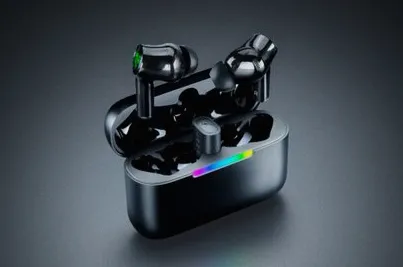
The answer is not as obvious as “expensive wins.” One recent budget set got hit with a blunt verdict: not worth $50. At the same time, Razer is pushing a much more premium idea with the Hammerhead V3 HyperSpeed: stronger ANC, gaming-grade wireless, and a smart charging case designed to kill the usual Bluetooth hassles. If you care about platform flexibility, latency, comfort, and whether your earbuds are actually useful beyond the marketing copy, this is the comparison that matters.
The short version: who should buy what?
If you want the fastest path to better handheld and console audio, the Hammerhead V3 HyperSpeed is the safer buy for serious players. If your budget hard-stops at around $50, you should actually be more careful, not less. That price band is where a lot of accessories look good on paper and then fall apart on the things that matter: stability, tuning, fit, and usable low-latency performance.
Here is the side-by-side breakdown.
| Feature | Razer Hammerhead V3 HyperSpeed | Typical Budget Gaming Earbuds (~$50 class) | What It Means for PS5 / Switch / Steam Deck |
|---|---|---|---|
| Wireless standard | 2.4GHz HyperSpeed wireless plus Bluetooth-style convenience features | Often standard Bluetooth, sometimes with a “game mode” label | 2.4GHz is usually the difference between genuinely responsive game audio and “close enough” lag. |
| Latency focus | Built specifically to solve slow Bluetooth hassles | Often promises low latency but depends heavily on codec support and device behavior | On Steam Deck and Switch, consistency matters more than marketing claims. |
| ANC | Claimed 50% stronger ANC | Usually basic ANC or passive isolation only | Better ANC helps on commutes, LAN setups, and noisy living rooms, but can affect fit and battery priorities. |
| Case design | Smart HyperSpeed Case designed as a major selling point | Standard charging case with little added function | If you swap between devices often, the case can be part of the workflow, not just storage. |
| Multi-platform appeal | Explicitly targeted at multi-platform gamers | Usually phone-first with gaming as a side feature | That difference shows up fast when moving from handhelds to docked play. |
| Value risk | Higher entry price, but clearer feature justification | Lower price, but much higher chance of compromise or disappointment | Cheap only wins if performance is good enough. Too often, it is not. |
| Best buyer type | Competitive players, handheld enthusiasts, commuters, multi-device users | Casual users who mostly watch media or play slower single-player titles | Your genre mix matters. FPS and rhythm players are less forgiving of lag. |
Why the Hammerhead V3 HyperSpeed has the stronger case
Razer’s pitch is straightforward, and for once that is a good thing. The Hammerhead V3 HyperSpeed launched as a gaming-first earbud set for people who are tired of Bluetooth being “fine” until it suddenly is not. That matters because console and handheld players have been dealing with awkward wireless compromises for years: pairing weirdness, codec inconsistency, latency that changes by device, and earbuds that sound okay for music but feel mushy in games.
2.4GHz wireless is the key spec here. Not ANC. Not even branding. The reason dedicated gaming headsets still dominate in competitive circles is because low-latency wireless done properly beats Bluetooth convenience every time when reaction speed matters. Earbuds have historically lagged behind over-ear headsets in this area, so when a brand actually builds around 2.4GHz performance, you should pay attention.
The second big feature is the 50% stronger ANC claim. That sounds like pure commuter fluff until you think about where people actually use handheld gaming gear. Steam Deck on a train. Switch in a crowded house. Portal-style remote play from the couch while somebody else is watching TV. Better ANC is not just about travel. It helps preserve lower listening volume, and that reduces ear fatigue during longer sessions.
Then there is the smart HyperSpeed Case. This is the kind of detail accessory buyers tend to underestimate. A good case is not just a battery brick. It changes whether the earbuds feel annoying to use. Quick transitions between your handheld, phone, and docked setup matter. If a case makes that process smoother, the product stops feeling like another fussy gadget and starts fitting your actual play routine.
Where budget gaming earbuds usually fall apart
The budget tier is full of trap buys. Harsh? Sure. Accurate? Also yes.
One of the clearest warnings from the current market is that a $50 gaming earbud can still be a bad purchase. That verdict matters because many buyers shop exactly in this range, assuming they are safely above total junk but still getting “value.” In reality, this is where brands often cram in just enough buzzwords to sound competitive without solving the core issues.
Problem 1: “Game mode” is not the same as proper low latency
A lot of budget sets lean on Bluetooth tuning tricks. Sometimes they help. Sometimes they barely move the needle. And sometimes they introduce connection instability, worse battery life, or messy switching behavior between devices. If you play shooters, fighting games, rhythm games, or anything that punishes late cues, those compromises are brutal.
Problem 2: cheap tuning can wreck positional audio
Even when latency is acceptable, weak audio tuning ruins the point. Overboosted bass can blur footsteps. Recessed mids can bury reloads, pings, and voice chat. Treble spikes can make long sessions tiring. A budget earbud that sounds “exciting” for music demos may actually be terrible for competitive awareness.
Problem 3: fit instability kills consistency
Earbuds are only as good as their seal. A bad fit changes bass response, passive isolation, and how reliable footsteps sound from match to match. This is one area where premium products often justify more of their cost through better ergonomics, better included tips, and more stable shells.
That same ergonomics mindset applies across your setup. If you are already customizing grip and comfort on handheld gear, things like Nintendo Switch Shells can matter just as much as audio upgrades because comfort affects how long you can actually play at your peak.
Best use cases by platform
For Steam Deck players
This is arguably where the Hammerhead V3 HyperSpeed makes the most sense. Steam Deck users tend to play a wider genre spread, often switch environments, and care about convenience without giving up responsiveness. Bluetooth buds are serviceable for slower RPGs and video playback, but if you are bouncing into shooters, action games, or cloud sessions, lower-latency wireless becomes much easier to appreciate.
Also, Steam Deck owners are usually deep enough into hardware tweaking to notice weak accessory performance quickly. If you are already the kind of player who adjusts TDP, refresh caps, and per-game profiles, are you really going to ignore obvious audio lag?
For Nintendo Switch players
Switch buyers are often more price-sensitive, which makes the budget earbud market especially tempting. But Switch is also a platform where portability, battery habits, and quick pickup-and-play sessions make a good wireless setup feel amazing. The catch is that weak earbuds become annoying fast on a portable-first system.
If you regularly upgrade your carry setup, browse broader Nintendo Switch accessories with the same skepticism you apply to controllers and cases: ignore hype, focus on comfort, durability, and whether the feature actually improves play.
For PS5 players
PS5 users have a slightly different equation. If you mainly play from a fixed seat, a dedicated over-ear gaming headset still has strong advantages in mic quality, battery life, and positional scale. But earbuds make sense if you want a lighter fit, travel with your gear, or hate headset clamp during long sessions.
In that case, the premium route makes more sense than the bargain route. PS5 players are used to polished first-party or premium accessory experiences. A flaky $50 earbud that disconnects, lags, or feels cheap will stand out immediately.
Should you ever buy the cheaper option?
Yes, but only if you are honest about your use case.
- Buy budget earbuds if you mostly play single-player games, visual novels, slower RPGs, or watch media.
- Buy budget if audio lag annoys you only a little and your main goal is basic wireless convenience.
- Buy premium 2.4GHz earbuds if you play competitive games, swap devices often, or already know Bluetooth delay drives you crazy.
The hidden factor is not just raw performance. It is frustration. A premium accessory that works every time often gives you more value than a cheap one that keeps forcing workarounds.
Expert tip: judge gaming earbuds by workflow, not the spec sheet alone
Most buyers compare battery life, driver size, and ANC claims first. That is backward for gaming. Start with workflow:
- How fast can you connect and start playing?
- Does the latency stay consistent across your actual devices?
- Do the earbuds stay comfortable after 90 minutes?
- Can you hear directional cues without EQ gymnastics?
- Does the case make daily use easier or just bulkier?
If a product fails the first two points, the rest barely matters. This is where the Hammerhead V3 HyperSpeed has the most obvious advantage over budget rivals. It is being sold on a clear problem-solution basis: gamers are tired of slow Bluetooth, so Razer built around bypassing that pain point.
Quick rule: If your earbuds are for ranked play or fast action games, prioritize wireless protocol and stability first, sound signature second, ANC third. Most shoppers reverse that order and regret it.
The smarter buying decision for 2026
The market is shifting toward more serious wireless earbud options for console and handheld gamers, and that is good news. But it also means the old “good enough for fifty bucks” logic is getting exposed. A product can be affordable and still be a poor buy. That warning has become impossible to ignore.
If your priority is reliable low-latency gaming audio across multiple devices, the Razer Hammerhead V3 HyperSpeed looks like the stronger investment because it directly addresses the biggest pain point in this category. If your priority is spending as little as possible, be picky and skeptical. Do not assume the gaming label means much.
And if you are already maintaining your handheld setup, do not neglect the basics that protect long-term performance. Even something as practical as a joycon drift repair kit can deliver more day-to-day value than another disposable accessory impulse buy.
The clean takeaway? Spend where the improvement is obvious. For wireless earbuds, that usually means paying for latency performance and real usability, not just another case full of promises.