You can ignore a lot of gaming news and lose nothing. A celebrity casting update? Fun. A late-stage export bottleneck for AI chips? Important for the tech industry, but not always something that changes your setup tomorrow. But when a hero shooter suddenly promises 60fps on new handheld hardware, a budget OLED monitor drops to a price that starts to look dangerously reasonable, and even an old comfort-game update reminds everyone how long this generation has been dragging on, that mix tells you something real: the gaming hardware market is shifting in ways that directly affect what you should buy, skip, or wait out.
The big story here is not that every headline belongs in the same bucket. It is that they expose a familiar pattern in gaming gear: software upgrades, display pricing, and semiconductor policy do not move at the same speed, yet they collide in your buying decisions. One day Blizzard is finally giving Switch 2 owners the version of Overwatch they should have had years ago, with 60fps in both handheld and docked play. Another day Alienware is floating a $350 OLED gaming monitor, a number that would have sounded fake not long ago. At the same time, Nvidia and AMD export approvals getting stuck under a government bottleneck is a reminder that hardware pricing and availability are still vulnerable to forces far outside gaming. If you care about console accessories, controller feel, display latency, and whether your next upgrade has real performance upside, this is the kind of week you should pay attention to.
The Switch 2 performance bump matters more than the game itself
Forget the branding shuffle from Overwatch 2 back to just Overwatch. The meaningful part is the hardware target: 60fps handheld and docked on Switch 2. That is the headline because competitive shooters live and die on frame consistency, input feel, and clarity while tracking targets. The original Switch version was always compromised. You could play it, sure, but anybody who has spent time on a responsive display with cleaner frame pacing knows the difference instantly. A locked 60fps does not just look nicer. It tightens aim corrections, reduces that smeared feeling during quick turns, and makes gyro-assisted tracking less of a fight.
What players actually feel is not just frame rate, but control confidence. Going from a compromised portable shooter experience to stable 60fps in both play modes changes who the platform is for. Casual dabblers may not care. Anyone queueing seriously will.
That matters for accessories too. If Switch 2 becomes a more credible home for shooters, ergonomics suddenly move up the priority list. Thumbstick tension, grip shape, trigger travel, and even the texture of your caps become more than comfort tweaks; they become performance variables. This is exactly why accessory categories that used to feel “optional” start becoming standard purchases after a hardware leap. If you are already planning your setup beyond the console itself, browsing proven PS5 accessories can actually help frame what you should expect from premium console add-ons in general: better grip, lower fatigue, and fewer compromises in longer sessions.
Why this is a warning sign for older hardware expectations
The less obvious takeaway is that Switch 2 is exposing just how many players normalized bad performance on portable hardware. Once a major live-service shooter lands with proper 60fps support in handheld mode, the tolerance for muddy image quality, sluggish response, and unstable frame delivery drops fast. You see it every generation. A single good port recalibrates expectations. Suddenly people stop asking, “Can this run?” and start asking, “Why doesn’t this run well?” That is healthy. It pushes accessory makers, game developers, and even display manufacturers to stop designing around excuses.
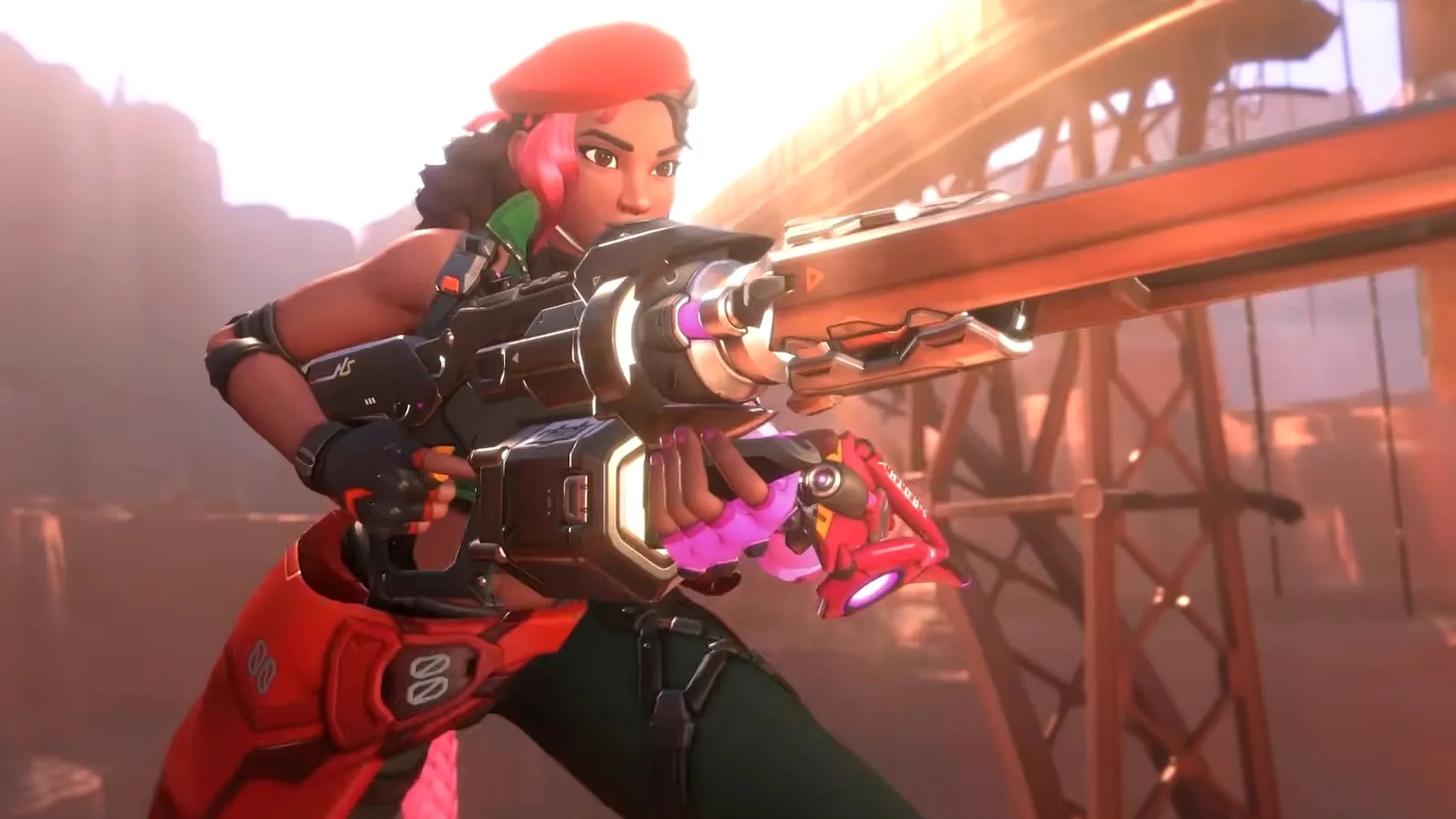
And yes, the timing is smart. When new heroes like Sierra arrive alongside a hardware-upgraded launch, the game is not just chasing old players; it is trying to redefine platform perception. If Blizzard can make Switch 2 feel viable for competitive queues, expect more publishers to treat it less like a side-port box and more like a legitimate primary platform for a chunk of players.
The $350 OLED monitor story is really about console buyers getting leverage
Alienware pushing a new OLED gaming monitor to roughly $350 is the kind of pricing move that can reshape the whole discussion around console displays. Not because every OLED at that price is automatically a must-buy, but because it drags premium panel tech closer to the “I was going to buy IPS anyway” tier. That is where markets flip. Once OLED is close enough in price, buyers start comparing black levels, response times, motion clarity, and HDR pop against mid-range LCDs that suddenly look a lot less special.
OLED stops being luxury gear the moment buyers can justify it as a smart compromise. At that point, IPS is no longer the default recommendation. It has to defend itself.
For PS5, Xbox, and docked handheld players, this is a big deal. A cheaper OLED can be the single most noticeable upgrade in your entire setup, sometimes more impactful than replacing a controller or buying a premium headset. Pixel response remains the killer advantage. In games with rapid camera swings, dark environments, or high-contrast HUD elements, OLED can make standard LCD panels feel hazy and slow. The caveat, of course, is that you still need to inspect the fine print: HDMI bandwidth, VRR support, HDR behavior, brightness consistency, text rendering, and whether the monitor is actually tuned well for console output rather than only PC specs on a product page.
That is where a lot of buyers fumble. They see “OLED” and assume every other box is checked. Wrong. If your use case is mostly console, confirm you are not sacrificing key features for a headline price. If your handheld is seeing more use too, the same logic applies when building a travel or desk setup around Steam Deck accessories: the screen you connect to can define the whole experience more than another incremental gadget ever will.
Why Nvidia and AMD export delays still matter to gamers
The AI chip export bottleneck involving Nvidia and AMD may sound remote from controller mods and console setups, but ignoring it would be a mistake. Government approval delays, especially with reported staffing strain and turnover, are not just policy noise. They are part of the same supply-chain pressure system that can distort pricing, inventory planning, and R&D priorities across the wider hardware market. When top-end silicon allocation gets messy, everyone downstream feels some version of it eventually.
No, that does not mean your next controller shell or Hall effect stick module is about to vanish overnight. It means the industry remains vulnerable to non-gaming shocks, and those shocks can influence where engineering effort and manufacturing capacity go. If AI demand keeps dominating margins while export rules complicate movement of high-value chips, gaming hardware competes for attention in a market that increasingly rewards enterprise-scale products first. That can show up as slower trickle-down on display controllers, more cautious pricing, or delayed product segmentation. You might not feel the impact in a week, but over a buying cycle? Absolutely.
This is exactly why the smartest gear buyers separate “want it now” purchases from “wait and watch” purchases. Displays that hit an obvious value threshold are often worth acting on. Accessories tied to comfort, repair, or durability are usually safe buys. Big silicon-dependent upgrades are where patience can save you money.
Even the Animal Crossing update says something about the market
The new Animal Crossing: New Horizons update is smaller-scale news on paper: bug fixes, DLC issue cleanup, and a nostalgia-leaning special gift that mostly reminds players how old the game is. But that is precisely why it belongs in the wider conversation. Long-tail software support keeps aging hardware ecosystems relevant, and that has a direct effect on accessory demand. Players do not stop buying grips, replacement sticks, travel cases, and repair tools just because a platform is old; they often buy more of them when a comfort game pulls them back in.
If anything, legacy support strengthens the repair side of the accessory niche. Older consoles and controllers stay in active rotation longer, and wear starts showing up in the usual pain points: drifting sticks, weakened batteries, glossy thumb caps, mushier buttons. If you have a Switch setup that is still seeing regular use thanks to updates like this, keeping a reliable joycon drift repair kit around is not overkill. It is basic maintenance, especially if you would rather spend twenty minutes fixing the problem than losing another week to inconsistent movement inputs.
The Helldivers movie update is the outlier that proves the rule
The Helldivers movie getting a promising update, with its director talking up Jason Momoa as the only person for the role, is classic cross-media momentum. It does not directly tell you which monitor to buy or which controller mod improves your aim. What it does show is how strong game brands are becoming outside the game client itself. That broader cultural push matters because it extends the lifespan of player engagement. More engaged players spend more time in the ecosystem, and longer time in the ecosystem means more scrutiny on hardware quality. Once players are invested for the long run, they stop tolerating cheap sticks, weak battery life, and washed-out displays.
So here is the practical read on this entire news cycle. If you play shooters or anything timing-sensitive, Switch 2’s 60fps push is a sign to get more serious about ergonomics and display quality. If you were already eyeing a monitor upgrade, a budget OLED is now worth real scrutiny rather than automatic skepticism. And if you are shopping around an older platform, prioritize maintenance gear and repairability, because software support can keep “old” hardware relevant far longer than expected. The flashy headlines come and go. The smart setup choices are the ones that keep paying off every time you pick up the controller.